Gelatide Official Website › Liquid supplement guide
The liquid supplement guide: what a dropper actually changes
A liquid supplement moves the dose decision from the manufacturer to you, removes the swallowing problem, and introduces a shelf life that a capsule does not have. The absorption advantage it is usually sold on is real for some compounds and undemonstrated for most botanical blends, including this one.
Written without reference to any particular brand, and useful whether or not you buy anything.
Five things a dropper changes, and one it probably does not
| Property | Liquid drops | Capsule | Which is better |
|---|---|---|---|
| Who sets the dose | The person holding the bottle | The manufacturer | Capsule, for consistency. Liquid, if you need to titrate |
| Swallowing | No shell to swallow | A real barrier for many adults | Liquid, clearly. This is the strongest case for the format |
| Dose consistency | Depends on bulb technique and drop size | Identical every time | Capsule |
| Shelf life once opened | Months, and heat and light matter | Years, and largely inert | Capsule |
| Taste | You taste it, and botanicals are bitter | You do not | Capsule |
| Label clarity in practice | Often weaker on serving size | A count is a serving size | Capsule |
| Absorption | Claimed faster | What most trials actually used | Unsettled. See below |
Six of the seven rows have a clear answer and only one of them favours the liquid. That one reason is a very good reason for the people it applies to, and it is not the reason the format is usually sold on.
The uncomfortable summary is that liquids are typically chosen for the wrong reason. Buyers pick them because they have been told absorption is better, and they benefit from them because swallowing is easier. Those are different arguments and only the second one is reliably true.
Where the absorption story comes from, and what it actually supports
The claim runs like this: a capsule has to disintegrate before its contents are available, a liquid does not, therefore a liquid is absorbed faster and more completely. The first two steps are true. The third does not follow in the way the marketing implies.
What is genuinely true
Disintegration time is real, and a poorly made tablet can fail to break down at all. Some compounds do have meaningfully better bioavailability in a solubilised form, and sublingual delivery genuinely bypasses first-pass metabolism for a small number of molecules where the dose is tiny and the molecule is small enough to cross the mucosa.
What does not follow
Botanical extracts are mixtures of many compounds with different solubilities and molecular weights. Holding a mixture under the tongue for thirty seconds does not deliver it sublingually in any meaningful proportion; most of it is swallowed. And, critically, almost every trial behind almost every botanical on the market used a capsule or a tablet. The research does not describe the liquid version.
So the honest position on any liquid botanical product is that the absorption advantage is asserted rather than demonstrated, and that the doses in the literature were achieved with the format the marketing is arguing against.
A format claim that would make the trials inapplicable is a strange thing to advertise alongside the trials.
Gelatidebalance editorial deskWhy liquid labels are so often vague about a serving
A capsule label cannot avoid telling you the serving size, because the serving size is a count. One capsule, two capsules, the number is unavoidable. A liquid label has to make a positive decision to print a serving, and a surprising number of them do not.
When a serving size is missing, three things become unknowable at once. You cannot work out how long a bottle lasts, so the supply claim is unverifiable. You cannot work out what you are taking, so no research dose can be compared. And you cannot work out the cost per day, so the price ladder is unverifiable too.
The arithmetic that partly rescues it
Where a seller publishes a supply claim, the serving can be inferred. If a 60 mL bottle is sold as a thirty-day supply, the implied serving is 2 mL a day. At roughly 0.05 mL per pipette drop that is about forty drops, though drop size varies with viscosity, bore and temperature and should be treated as an order of magnitude rather than a specification. The Gelatide dosing page works this through for one specific product.
Treat that arithmetic as the floor of what you are entitled to know, not the ceiling. A label that made you derive its serving size has already told you something about how much care went into it.
The cost of a liquid that nobody mentions
- ›An opened bottle is a different object from a sealed one. Air enters every time the pipette comes out, and oxidation is slow but real.
- ›Heat and light matter. Amber glass exists to block ultraviolet and it does not make a bottle immune to a sunny windowsill or a warm car.
- ›The pipette is a contamination route. Touching it to your tongue or to a glass and returning it to the bottle introduces whatever was there.
- ›A multi-bottle order stretches the problem. A six-bottle purchase means the last bottle is opened five months after the first, and it has been sitting somewhere the whole time.
- ›Refrigeration is not automatically the answer. A glycerin-based liquid thickens when cold, which makes the drop size less consistent, not more.
None of this applies to a sealed capsule in a drawer, which is chemically inert for years. It is the real trade-off of the format and it is almost never disclosed, because it is inconvenient for a seller pushing a six-month order.
Six questions to ask of any liquid supplement label
What is the serving size, in millilitres or drops?
If it is not printed, everything else on the label is unanchored. This is the first question and on a surprising number of products it is also the last.
How many servings per container?
Bottle volume divided by serving size. If the seller's supply claim disagrees with that arithmetic, one of the two is wrong.
What is the base?
Water, glycerin, ethanol, or a combination. It affects taste, viscosity, drop size and whether the product suits somebody avoiding alcohol.
What is the preservative?
A botanical liquid needs one. If no other-ingredients line appears at all, the label is incomplete rather than clean.
Is any extract standardised, and to what?
A percentage of a marker compound is what makes one extract comparable with another. Without it, a name is only a name.
Does anything on it carry caffeine?
Green tea, guarana, kola nut, yerba mate and coffee fruit all do. Any product containing one of them should state a total, and many do not.
When the format is the right call
You cannot swallow capsules
This is the case the format exists for, and it is a serious quality-of-life issue for a large number of adults. Nothing else on this page outweighs it.
You need to adjust the amount
A dropper lets you take half a serving while you find out how something suits you. A capsule does not divide neatly.
You would rather not take a shell
Gelatin capsules are an issue for some diets and some beliefs. Vegetable capsules exist, and a liquid avoids the question entirely.
You are buying on the absorption claim
Then reconsider. It is the weakest of the four reasons, it is undemonstrated for botanical blends, and the research behind your ingredients used capsules.
One more group deserves a mention, because nobody writes about them: people who have tried a capsule version of the same idea and stopped because they kept forgetting it. A dropper on a kitchen counter is more visible than a bottle in a cupboard, and adherence is the single largest determinant of whether anybody in this category ever finds out whether a product does anything. That is a weak reason on paper and a real one in practice.
And one group who should treat the format as a reason to look harder rather than to relax: anyone who needs to know exactly what they are taking, whether for a clinician, a training programme or their own peace of mind. Liquid labels in this category are measurably vaguer about servings than capsule labels, for the structural reason set out above, and choosing a liquid makes that problem more likely rather than less.
About this guide
This guide is written by the Gelatidebalance editorial desk, which also operates a retail desk selling a liquid supplement. That is a conflict and it is disclosed here rather than at the bottom: a page arguing that capsules win six rows out of seven is written by people who sell drops.
It is published in that form because the alternative, a guide that concluded liquids are better, would be untrue and would be recognised as marketing within a paragraph. The one row where the liquid wins is the row that matters to the people it matters to, and that is a strong enough case to sell on without inventing the other six.
Last reviewed September 17, 2026. Corrections to [email protected].
Every page, every journal post, the bottle facts and the ingredients go through review by Dr. Dyan Hes, MD before they ship. We write these pages from the printed Gelatide bottle, the manufacturer’s own listing artwork and the info page this desk is supplied from, cite public research for each of the six named extracts, and print “not published” wherever a figure is not disclosed rather than estimating it. This label publishes no amount for any extract and no serving size in millilitres, and that fact appears on every page where a dose is discussed. Where the seller’s marketing claims more than the bottle supports, we say so on the page. Corrections are made on the page itself and the review date moves forward. Write to [email protected]. Last reviewed September 2026 by Dr. Dyan Hes, MD.
Sources used in this guide
- National Center for Complementary and Integrative Health. Dietary and Herbal Supplements. https://www.nccih.nih.gov/health/dietary-and-herbal-supplements
- National Center for Complementary and Integrative Health. Using Dietary Supplements Wisely. https://www.nccih.nih.gov/health/using-dietary-supplements-wisely
- U.S. National Library of Medicine. Dietary Supplements. MedlinePlus. https://medlineplus.gov/dietarysupplements.html
- U.S. National Library of Medicine. Caffeine. MedlinePlus. https://medlineplus.gov/caffeine.html
- Hu J, Webster D, Cao J, Shao A. The safety of green tea and green tea extract consumption in adults — results of a systematic review. Regul Toxicol Pharmacol. 2018;95:412-433. https://pubmed.ncbi.nlm.nih.gov/29580974/
- Federal Trade Commission. Health Products Compliance Guidance. December 2022. https://www.ftc.gov/business-guidance/resources/health-products-compliance-guidance
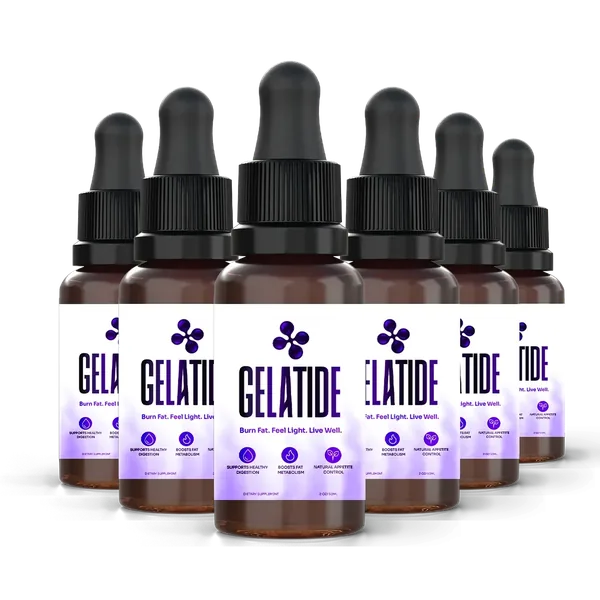
Order Gelatide if the format is right for you
One good reason to choose a liquid, and this guide says which one it is.
From $49 a bottle · 60 days to change your mind
Order Gelatide On The Official WebsiteOne-time payment, no subscription · 60-day money-back guarantee · lot GEL-26/GE-6482 · tracking and refunds +1 (202) 604-0611