Gelatide Official Website › Reference guides
Gelatide reference guides
Two reference guides sit alongside the Gelatide product pages. The first covers the liquid supplement format: what a dropper actually changes, what the absorption claim rests on, and how to read a liquid label. The second is a buying checklist for metabolism drops, scored against Gelatide itself.
These two are written to be useful whether or not you buy anything, which is the only reason a retail site’s guides are worth reading.
Two Gelatide reference guides
Why these are the two guides a Gelatide buyer needs
A reference guide on a retail site usually exists to rank for something. These two exist because a buyer looking at a dropper bottle of botanical extracts has exactly two questions that the product pages cannot answer without seeming self-serving.
The first is about the format. Liquid supplements are sold on an absorption story that almost nobody checks, and the real differences between a dropper and a capsule are not the ones the marketing names. That guide is written without reference to any particular product.
The second is about the decision. A checklist is only useful if the product selling it to you can fail parts of it, so the second guide scores Gelatide against its own twelve points and publishes the failures. It comes out at seven and a half.
Both are maintained by the same desk that writes the product pages, under the same method set out on the about page, and both are dated.
How to use these Gelatide guides before you buy anything
Read the format guide first if you are choosing between forms
It answers the question that comes before the product question: is a dropper the right thing for you at all, and what does it cost you in consistency and shelf life.
Take the twelve-point checklist to whatever you are considering
It is not written around this product. Score two or three competing supplements against it and the differences show up quickly, which is the point.
Come back to the label page with the checklist in hand
Most of the twelve points are answered by a label, and the label page sets out exactly which of them this label can and cannot answer.
Finish on the safety page, with a pharmacist
The safety page is written to be printed and taken to a five-minute conversation that costs nothing.
What the liquid format guide concludes about Gelatide and its category
Seven checkable differences between drops and capsules, and only one of them favours the format this desk sells.
The short version, so you can decide whether the full guide is worth your time. A dropper differs from a capsule in seven checkable ways, and on six of the seven the capsule is the better object.
The capsule wins on dose consistency, because the manufacturer set the amount and you cannot vary it by squeezing harder. It wins on shelf life, because a sealed capsule is chemically inert for years and an opened liquid is not. It wins on taste, on travel, on label clarity in practice, and on the fact that almost every trial behind almost every botanical ingredient used a capsule or a tablet rather than a liquid.
The liquid wins on one thing and it wins on it decisively: swallowing. For an adult who cannot comfortably take a capsule, that single row outweighs the other six, and it is a serious quality-of-life issue rather than a preference.
The seventh row, absorption, is the one the format is usually sold on and it is the one the guide declines to award. It is real for some molecules in some formulations, it has not been demonstrated for botanical extract blends, and the doses in the literature were achieved with the format the marketing argues against. Read the full guide.
What the buying checklist scores Gelatide at
Twelve points, six about the label and six about the seller, fixed before the scoring was done. Gelatide reaches seven and a half.
It passes everything a retailer controls. There is a refund window longer than thirty days that covers opened bottles. There is a named street address and a telephone that answers. There is a lot code, GEL-26/GE-6482, that can be matched to an order. The ingredients are named in full with the plant part specified, which is better than many products in this category manage, and the format is stated unambiguously.
It fails four points, and all four are in the first half of the list: no serving size, no Supplement Facts panel, no amount for any active, and no caffeine total on a product with two caffeine-bearing extracts in it. The half point is the price, which the supplier does not publish and which appears on the seller’s info page, dated where it is reproduced here.
The shape of that score matters more than the number. It describes a competent commercial operation wrapped around a label that does not tell you what you are taking, and it makes the risk you are accepting specific rather than vague. Read the full checklist.
What a Gelatide buyer is actually walking into
Both guides assume a reader who has already noticed that this category behaves strangely, so it is worth stating the two structural facts they are written around.
The evidence is about ingredients, never about products
Almost no finished metabolism supplement has been through a trial. What exists is research on individual compounds, at stated doses, usually in capsule form, often in small studies. Every sales page in this category cites that research, and the citation is only meaningful if the product tells you how much of the compound it contains. Most do not. Maunder 2020 pooled what randomised evidence there is for herbal weight products and found the effects small and the literature weak, which is the honest ceiling for the whole shelf rather than a comment on any one brand.
The differences that matter are commercial, not chemical
Because the formulas cannot be compared, the things you can actually compare are the label, the refund window, the contactability and the traceability. That sounds like a cop-out and it is the opposite: those four are checkable in ten minutes, and a product that is weak on all four is a poor purchase regardless of what is in the bottle.
The twelve-point checklist is built on exactly that observation, which is why six of its points are about a seller rather than about a formula.
What these Gelatide guides deliberately do not cover
- ›Dietary advice. Neither guide tells you what to eat. That is not this desk’s expertise and a supplement retailer is the wrong source for it.
- ›Medical decisions. Whether a supplement is appropriate alongside your medicines is a pharmacist’s question and the safety page is written to be taken to one.
- ›Competitor product reviews. The checklist is a method rather than a league table. Scoring rivals from a retail desk that sells one of them would not be worth reading.
- ›Anything about results. Neither guide predicts what you will experience. The timeline page describes what buyers here report, which is a different and weaker kind of claim.
Keeping a guide inside what its author actually knows is the whole of its authority. This desk knows about labels, about what a retail relationship can and cannot promise, and about what the published research on six named extracts says. It does not know what will happen in your body, and a guide that pretended otherwise would have nothing else worth trusting either.
How these Gelatide guides are kept up to date
Both guides carry a review date and both are rewritten rather than patched when something underneath them changes. Three things trigger a review.
A change to the label. If a future production run prints a serving size or a Supplement Facts panel, the twelve-point score changes and the checklist is rescored on the page rather than quietly updated. The failures published today are dated, and a reader who returns in a year should be able to see whether they were fixed.
New research. Four of the six extracts on this panel have thin literatures, and raspberry ketone has none at all in humans. A published trial on any of them would change what both guides say and the citation list is checked against its source records rather than accumulated.
A correction from a reader. The fastest route to an accurate page is somebody telling us it is wrong. Write to [email protected] with the guide name and what is mistaken, and the page is amended with the review date moved forward. Nothing is corrected silently.
Last reviewed September 17, 2026.
Who writes the Gelatide reference guides
The same desk that writes the product pages, under the same method: the printed bottle is the source, citations are confirmed against their records before they are written down, and any figure the manufacturer does not publish is printed as not published rather than estimated.
Both guides carry a review date and both name the conflict they are written under. A format guide that concludes capsules win six rows out of seven, and a checklist that gives the product this desk sells seven and a half out of twelve, are written by people who earn money when you order. That is a reason to check them rather than a reason to discount them, and every point in both is checkable against a label in five minutes.

Every page, every journal post, the bottle facts and the ingredients go through review by Dr. Dyan Hes, MD before they ship. We write these pages from the printed Gelatide bottle, the manufacturer’s own listing artwork and the info page this desk is supplied from, cite public research for each of the six named extracts, and print “not published” wherever a figure is not disclosed rather than estimating it. This label publishes no amount for any extract and no serving size in millilitres, and that fact appears on every page where a dose is discussed. Where the seller’s marketing claims more than the bottle supports, we say so on the page. Corrections are made on the page itself and the review date moves forward. Write to [email protected]. Last reviewed September 2026 by Dr. Dyan Hes, MD.
More about Gelatide
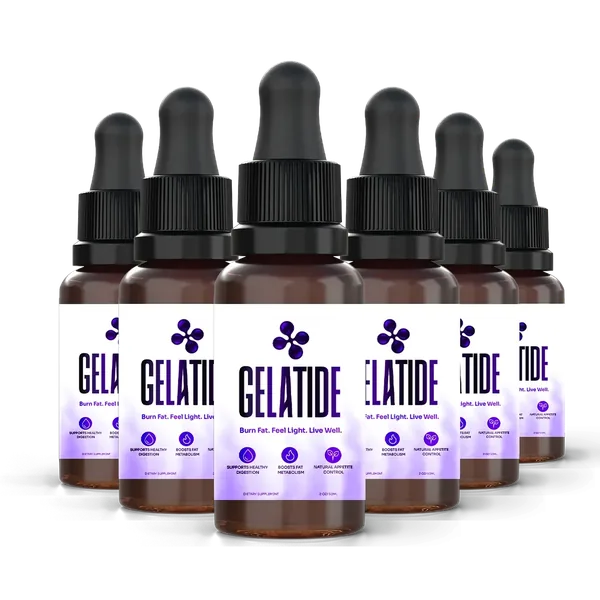
Order Gelatide after the checklist, not before it
Twelve points, seven and a half of them met, and the other four and a half named on the page rather than left out.
From $49 a bottle · 60 days to change your mind
Order Gelatide On The Official WebsiteOne-time payment, no subscription · 60-day money-back guarantee · lot GEL-26/GE-6482 · tracking and refunds +1 (202) 604-0611