Gelatide Official Website › Blog › Raspberry ketone
Raspberry Ketone: The Ingredient With No Human Trial
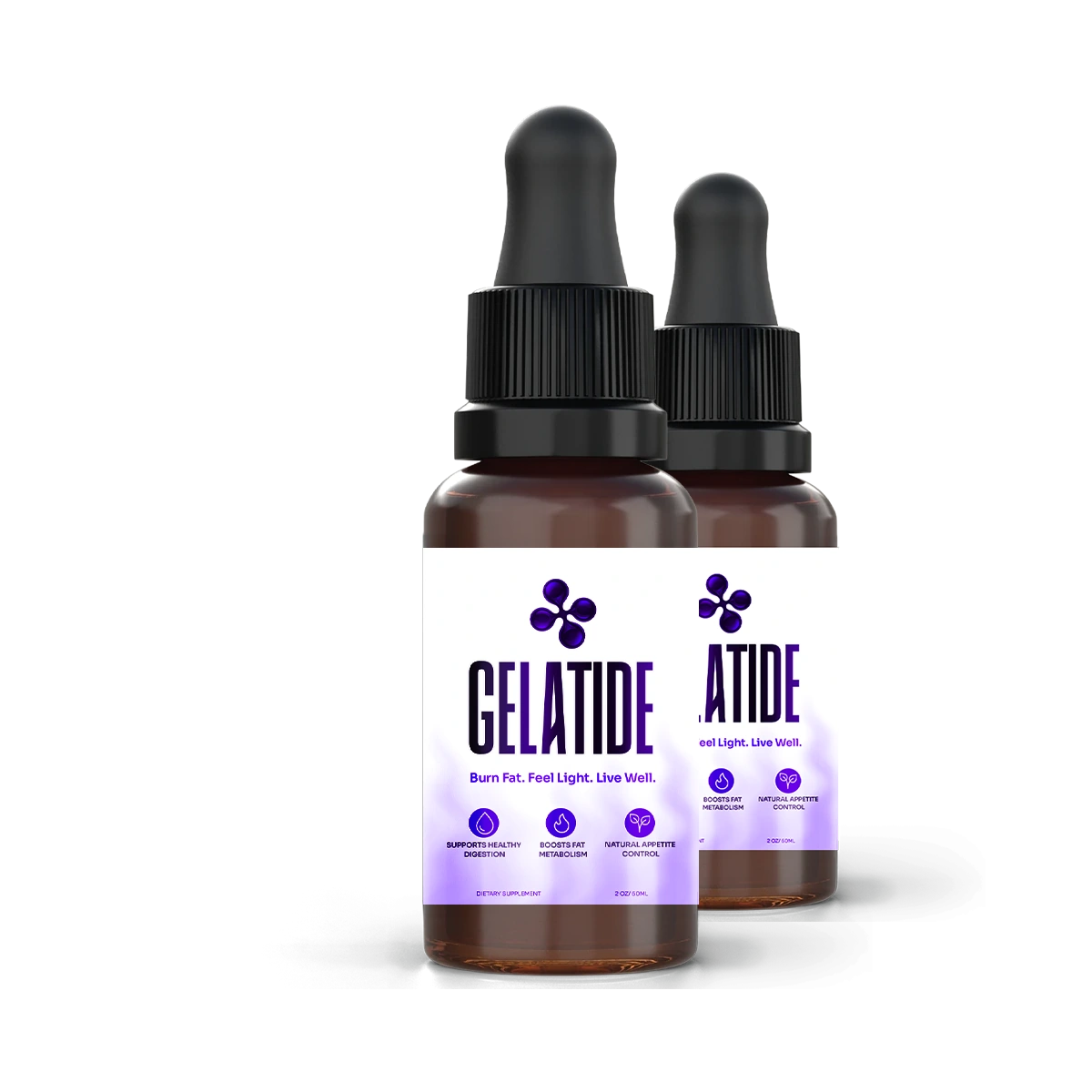
One of the six Gelatide extracts has no randomised controlled trial in humans of any size. How it became famous without one, what the study people cite actually tested, and why the missing amount makes it worse.
- There is no published randomised controlled trial of raspberry ketone alone in humans. Not a small one, not an old one, not a negative one.
- The cell and animal work is real. It is also not evidence about people.
- The one human study that includes it tested a multi-ingredient product alongside a diet and an exercise programme, which cannot isolate anything.
- On a label with no amounts, it could be the largest item or a trace. Nobody can tell.
General information, not medical advice. Gelatide is a dietary supplement for healthy adults aged 18 and over. It is not a drug, it is not FDA-approved, and it is not intended to diagnose, treat, cure or prevent any disease. Two of its six extracts carry caffeine and the total is not published, so if you take any prescribed medicine, or are being treated for blood pressure, a heart rhythm problem, diabetes or a thyroid condition, speak to a pharmacist before adding it to anything.
What raspberry ketone actually is
4-(4-hydroxyphenyl)butan-2-one. It is the aroma compound that gives raspberries their smell, it occurs in the fruit at very low concentration, and almost all of it in commerce is made synthetically because extracting it from fruit would be absurdly expensive.
That last point is worth sitting with. A supplement labelled raspberry ketone is not concentrated raspberry, and the quantity in a punnet of raspberries is measured in micrograms. The ingredient is a flavour molecule that has been repurposed, and it has been a permitted flavouring for far longer than it has been a supplement.
Structurally it resembles synephrine and capsaicin, which is the origin of the interest: compounds with that shape have been studied for effects on fat metabolism, and somebody reasonably asked whether this one behaved similarly.
How it became famous
Not through a trial. Raspberry ketone became a household name after a daytime television segment in 2012 described it in enthusiastic terms, and demand followed within days. That sequence is the whole story of the ingredient’s commercial life and it is why it appears on panels a decade later.
It is worth naming because it is a useful diagnostic. An ingredient with a famous name and no trial record almost always has an origin story like this one, and asking “how did I first hear of this?” is a surprisingly effective test.
The FTC guidance for health products is written around exactly this dynamic: the net impression created by an ingredient’s reputation can do work that no individual claim on the label ever has to do.
What the human evidence consists of
This is the section that is short because the literature is short.
| Study type | How many | What it would show |
|---|---|---|
| Randomised controlled trials of raspberry ketone alone | 0 | Whether it does anything in people |
| Randomised trials of a blend containing it | A small number | Whether the blend does something. Not what the ketone contributed |
| Human pharmacokinetic studies | Very few | What happens to it in the body, which is not the same as what it does |
| Cell and rodent studies | Many | Mechanism and plausibility, at doses far above anything a person takes |
| Safety reviews | A handful | Mostly from its long history as a flavouring rather than as a supplement |
Tao 2023 reviews the wider Rubus idaeus literature and reaches the same place. The chemistry is interesting; the human record is not there.
An empty first row is not the same as a negative result, and that distinction matters. Nobody has shown raspberry ketone does not work in humans, because nobody has run the study that could show either. The honest description is unknown rather than disproven.
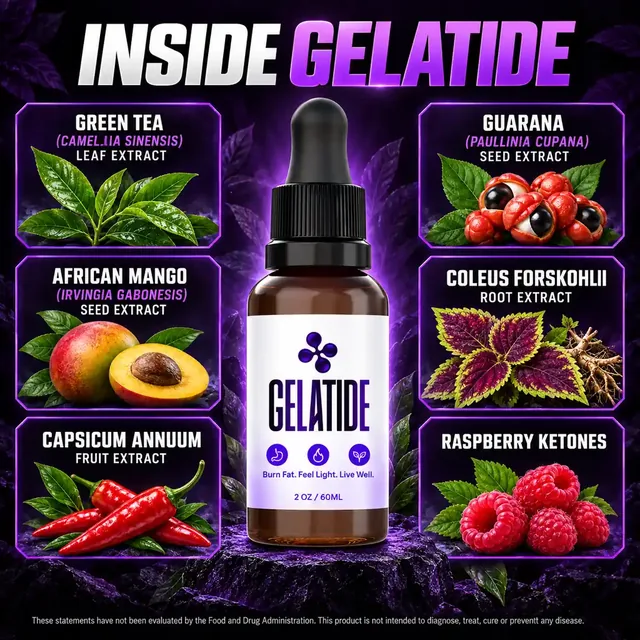
| Extract | Human trial record | Can it be matched to this bottle? |
|---|---|---|
| Green tea leaf | Meta-analyses of many trials | No, no amount is published |
| Capsicum annuum | Meta-analyses of thermogenesis trials | No, no amount is published |
| Guarana seed | Randomised trials, mostly of fatigue and performance | No, no amount is published |
| African mango seed | One striking trial, a cautious systematic review | No, and no standardisation either |
| Coleus forskohlii | Two small trials from 2005, one of them null | No, and no forskolin percentage |
| Raspberry ketones | None of it alone in humans | No, and there is nothing to match it to |
The last column is the same answer six times, which is the finding this whole website keeps arriving at. The last row is the one that is also empty on the left.
It is also not a reason for alarm about safety. The compound has a long history as a food flavouring at low levels, and the safety concern with supplement doses is that they are orders of magnitude higher than dietary exposure and have not been studied at that scale, which is a gap rather than a finding.
The study people cite, and what it can show
When a seller cites human evidence for raspberry ketone, the study is usually Arent 2018. It is a real trial, published in a real journal, and it is worth understanding precisely because it is so often used to carry more weight than it can.
It tested a multi-ingredient dietary supplement in overweight adults, alongside an exercise programme and a diet. Raspberry ketone was one component among several. The trial reported changes in body composition and in adipokines.
Here is the problem. With a diet, an exercise programme and a multi-ingredient supplement all changing at once, the design cannot attribute anything to any single component. That is not a flaw in the study, which was not trying to isolate the ketone. It is a flaw in the citation.
A trial of a blend is evidence about a blend. Using it as evidence about one ingredient inside the blend is the commonest citation error in this entire category, and it is usually made in good faith.
Gelatide, with the weakest ingredient named on the page
Six extracts, one of them with no human trial at all, and a desk that would rather tell you that before you order than after.
From $49 a bottle · 60-day money-back window
Order GelatideWhy the rodent work does not transfer
The animal literature is genuinely interesting and it is the reason the ingredient exists as a supplement. It is also a poor guide to what happens in a person, for three specific reasons rather than as a general hand-wave.
- The doses are enormous. Rodent studies commonly use amounts that, scaled by body weight, would be far beyond anything a human supplement delivers.
- The route is often different. Injection or a diet incorporated at a fixed percentage is not equivalent to a few drops taken orally once a day.
- The endpoint is different. Preventing weight gain in an animal on a high-fat diet from the start is a different question from reducing existing weight in an adult human.
None of that makes the animal work worthless. It makes it a reason to run a human trial, which is exactly what has not happened in the thirteen years since the ingredient became commercially significant. That absence is itself informative.
The problem with an unmeasured unknown
Now combine the two facts this website keeps returning to. Raspberry ketone has no human evidence, and this label publishes no amount for it.
Those two together produce a genuinely odd situation. If the amount were published and the evidence were absent, you could at least say “there is 100 mg of something nobody has studied in here”, and decide accordingly. With neither, the ingredient occupies an unknown fraction of a bottle for unknown benefit.
It could be the largest component by volume. It could be a trace included so the name can appear on the panel. Both are consistent with everything published, and a buyer has no way to distinguish them. Our label page sets out the twelve figures this product does not print, of which this is one.
What this says about the category
Zoom out and raspberry ketone is a good lens on the whole shelf. Maunder 2020 pooled the randomised evidence for herbal weight products and found the effects small and the literature weak. Payab 2020 reached a similar conclusion across obesity and metabolic syndrome trials. NCCIH puts the same view more plainly for a general reader.
Against that background, a six-ingredient panel where one ingredient has no human evidence at all is not an outlier. It is normal. What varies between products is whether anybody tells you.
Is it worth anything at all?
An honest answer has three parts.
- As an active ingredient: unknown, leaning toward no. Thirteen years of commercial significance and no trial is not a promising sign.
- As a safety concern: low, on current evidence, though that evidence is thinner than anybody would like at supplement doses.
- As a reason to choose this product: no. If raspberry ketone is what attracted you to Gelatide, that is the weakest of the six reasons available and it should be the one you discount.
The stronger reasons to consider this bottle are on our ingredients page and they are green tea and capsicum, where at least the effects have been measured and the size of them is known to be small.
The verdict
Raspberry ketone is a famous ingredient with an empty human evidence column. That is unusual to say on a page selling a product that contains it, and it is the accurate thing.
It does not make Gelatide a bad purchase, because nobody should be buying a six-extract blend for one of its six extracts. It does mean that if a sales page anywhere leans on raspberry ketone as a reason to buy, you now know exactly how much is behind that, and the answer is a television segment and some rodents.
If a proper trial is ever published, this page will be rewritten and the date at the top will move. Until then, the column stays empty, because the alternative is filling it with something that is not there.
Sources cited in this article
- Tao Y, Bao J, Zhu F, Pan M, et al. Ethnopharmacology of Rubus idaeus Linnaeus: a critical review on ethnobotany, processing methods, phytochemicals, pharmacology and quality control. J Ethnopharmacol. 2023;302(Pt A):115870. https://pubmed.ncbi.nlm.nih.gov/36341819/
- Arent SM, Walker AJ, Pellegrino JK, Sanders DJ, et al. The combined effects of exercise, diet, and a multi-ingredient dietary supplement on body composition and adipokine changes in overweight adults. J Am Coll Nutr. 2018;37(2):111-120. https://pubmed.ncbi.nlm.nih.gov/29111889/
- Maunder A, Bessell E, Lauche R, Adams J, Sainsbury A, Fuller NR. Effectiveness of herbal medicines for weight loss: a systematic review and meta-analysis of randomized controlled trials. Diabetes Obes Metab. 2020;22(6):891-903. https://pubmed.ncbi.nlm.nih.gov/31984610/
- Payab M, Hasani-Ranjbar S, Shahbal N, Qorbani M, et al. Effect of the herbal medicines in obesity and metabolic syndrome: a systematic review and meta-analysis of clinical trials. Phytother Res. 2020;34(3):526-545. https://pubmed.ncbi.nlm.nih.gov/31793087/
- National Center for Complementary and Integrative Health. Weight Control and Complementary and Integrative Health. https://www.nccih.nih.gov/health/weight-control
- Federal Trade Commission. Health Products Compliance Guidance. December 2022. https://www.ftc.gov/business-guidance/resources/health-products-compliance-guidance

Every page, every journal post, the bottle facts and the ingredients go through review by Dr. Dyan Hes, MD before they ship. We write from the printed Gelatide bottle and the manufacturer’s own listing artwork, cite public research beside the amount that research actually used, and print “not published” wherever a figure is not disclosed rather than estimating it. This label publishes no amount for any of its six extracts and no serving size in millilitres, and that fact appears in every article that discusses a dose. Corrections are made on the page itself and the review date moves forward. Write to [email protected]. Last updated October 29, 2026.