Gelatide Official Website › Blog › After opening
What Happens To A Supplement Liquid After You Open It
A sealed capsule is inert for years. An opened botanical liquid is not. Oxidation, heat, light and the pipette, and why a six-bottle Gelatide order means five months of storage before the last bottle is touched.
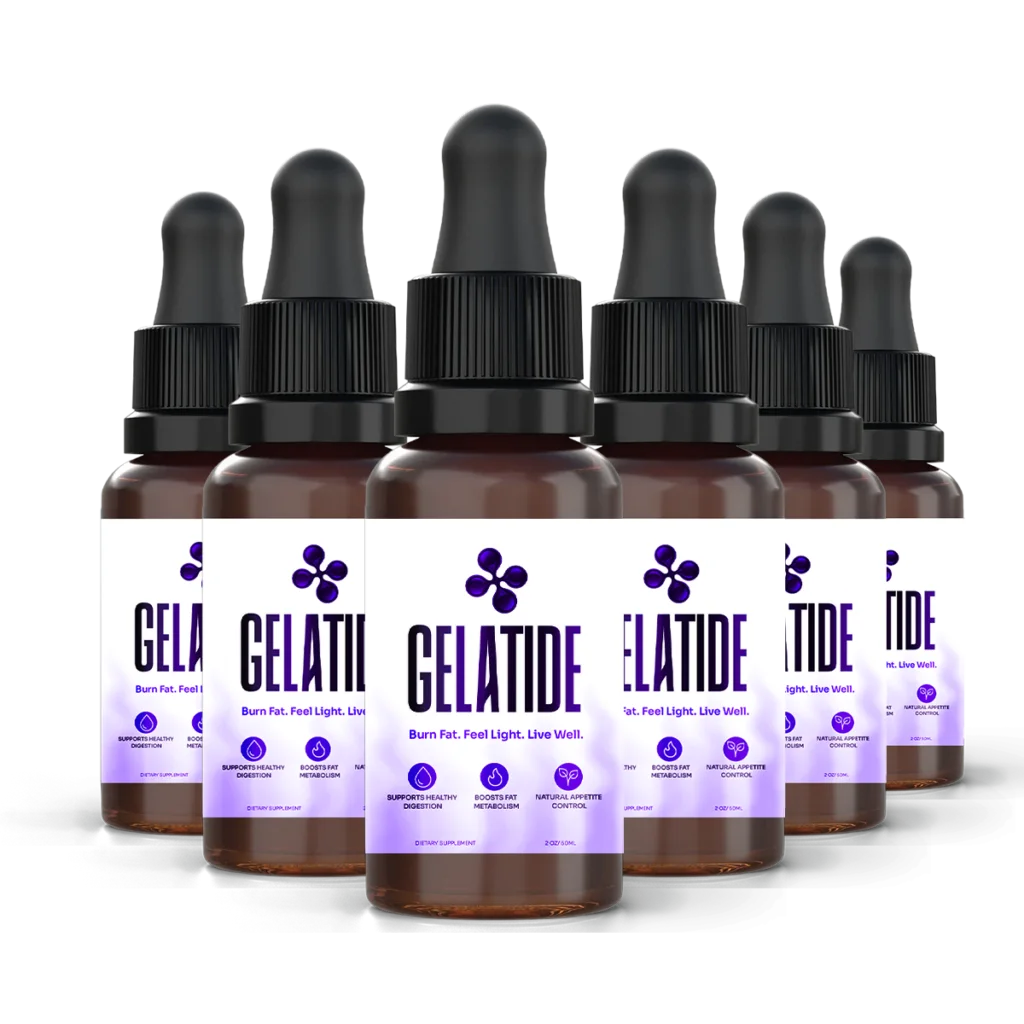
- A sealed capsule is close to inert for years. An opened botanical liquid is not.
- Air enters every time the pipette comes out. Oxidation is slow, real and invisible.
- Heat and light are what shorten it. Amber glass helps with light and does nothing about a warm cupboard.
- A six-bottle order stretches the problem across five months, which is the strongest practical argument against buying the largest pack first.
General information, not medical advice. Gelatide is a dietary supplement for healthy adults aged 18 and over. It is not a drug, it is not FDA-approved, and it is not intended to diagnose, treat, cure or prevent any disease. Two of its six extracts carry caffeine and the total is not published, so if you take any prescribed medicine, or are being treated for blood pressure, a heart rhythm problem, diabetes or a thyroid condition, speak to a pharmacist before adding it to anything.
What changes the moment the seal breaks
An unopened bottle and an opened bottle of the same product are, chemically speaking, two different objects. That is true of any liquid supplement and it is not true of a capsule in a sealed blister, which is why the subject almost never comes up.
Three things start when the tamper band comes off. Air reaches the liquid, and keeps reaching it every morning. The headspace above the liquid grows as the bottle empties, so the ratio of air to product increases as you go. And the pipette begins moving between the bottle and the outside world twice a day.
None of that is alarming and all of it is real. What it means is that a botanical liquid has a working life after opening, measured in months, which the label may or may not state and which nobody selling you a six-bottle order is likely to mention.
Oxidation, in plain terms
Botanical extracts are mixtures of many compounds, and a fair number of the interesting ones are antioxidants. Catechins from green tea are the clearest example on this particular panel.
An antioxidant is, by definition, a compound that reacts readily with oxygen. That is the property it is valued for, and it is also the property that makes it unstable in an oxygen-rich environment. A solution of catechins exposed to air degrades over time, faster when warm, faster still in light.
The practical consequence is not that an old bottle becomes dangerous. It is that it becomes less of what you paid for, quietly, with no visible change. A liquid that has sat half-empty on a warm shelf for two months is not the same liquid that came out of the box, and there is no way to tell by looking.
This is the one respect in which a product that publishes no amounts is oddly insulated from criticism. You cannot demonstrate that a liquid has lost potency when nobody told you what the potency was.
Light, heat and why amber glass exists
The bottle is amber for a reason that predates this product by a century. Amber glass blocks a substantial portion of ultraviolet light, which is the part of the spectrum most likely to drive photodegradation of organic compounds.
It is a genuine protection and it is not a licence. Amber glass does nothing about heat, nothing about visible light at high intensity over long periods, and nothing about the air inside the bottle.
- A kitchen windowsill combines direct sun with daily temperature swings. It is the worst common storage location and it is where a great many supplements live.
- The cupboard above a cooker is the second worst. It reaches temperatures people would not guess.
- A car glovebox is a special case of both, and a bottle that has spent a summer afternoon in one should be treated as compromised.
- A bedroom drawer or a cool cupboard is fine and costs nothing.
The pipette is a contamination route
This is the part that gets overlooked, because a dropper feels clean.
If the glass tip touches your tongue, your lip, the rim of a glass or a wet counter, and then goes back into the bottle, whatever was on it is now in the product. On a liquid with no strongly antimicrobial base, that is a real route for spoilage and it is entirely avoidable.
The fix is trivial: hold the dropper above whatever you are dosing into and let the drops fall, rather than touching the tip to anything. If you prefer taking it under the tongue, hold the tip clear of your mouth. Both take no longer than the alternative.
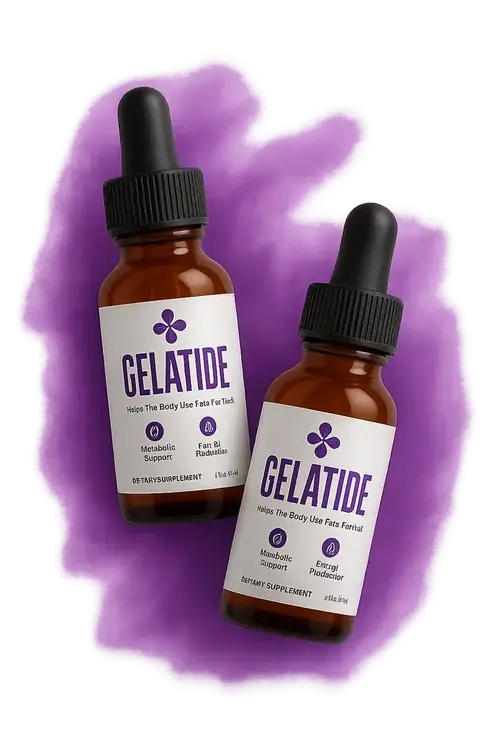
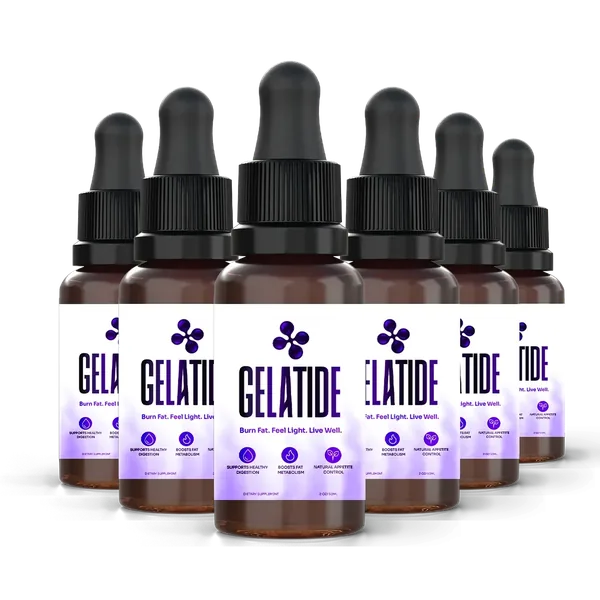
Gelatide in the pack size that suits how liquids actually keep
Three bottles is ninety days, fits inside the sixty-day window, and does not leave a bottle unopened for five months.
From $49 a bottle · 60-day money-back window
Order GelatideThe six-bottle problem
Everything above is manageable with one bottle. It becomes a genuine consideration with six, and this is the argument this desk would most like a reader to weigh before choosing a pack.
| Bottle | Opened around | Time in storage before opening |
|---|---|---|
| 1 | Day 1 | None |
| 2 | Day 31 | About a month |
| 3 | Day 61 | About two months |
| 4 | Day 91 | About three months |
| 5 | Day 121 | About four months |
| 6 | Day 151 | About five months |
At the arithmetic serving of 2 mL a day. Storage before opening is the gentler kind, since the seal is intact, and five months of it in a warm place is still five months.
The sixth bottle is not the same purchase as the first. It has been stored, unopened, for five months, in whatever conditions your house provides, and it will then be opened and used over another thirty days.
Set that against the commercial case for the largest pack, which is real: $1.63 a day against $2.80 for the smallest. Our pricing page lays out the ladder and still recommends the three-bottle order for a first purchase, and shelf life is the second reason after the sixty-day guarantee.
Storing a liquid supplement properly
Six habits. None of them costs anything.
- Keep unopened bottles in the box, in a cool cupboard away from any heat source.
- Write the date on each bottle as you open it. With six in a box this is the difference between knowing and guessing.
- Cap it firmly every time. The pipette assembly is a closure, not a seal, and a loose cap accelerates everything described above.
- Do not refrigerate by default. Cold thickens a glycerin-based liquid and makes the drop size less consistent, which trades one problem for another.
- Keep it out of the bathroom. Humidity and temperature swings from showers are worse than most people assume.
- Use the open bottle before starting another. Two bottles open at once doubles the exposure for no benefit.
NCCIH and MedlinePlus both cover supplement storage as part of their general guidance, and both make the same point about heat and light.
| Factor | Opened liquid | Opened capsule bottle |
|---|---|---|
| Air contact | Every serving, and the headspace grows as it empties | Minimal, and the shell protects the contents |
| Heat | Accelerates degradation of the solution | Very little effect |
| Light | Amber glass helps; it is not a shield | Opaque bottle, no issue |
| Contamination route | The pipette goes in and out twice a day | None |
| Working life once opened | Months | Years |
| Any of this on the label? | No | Usually a best-before date |
Six rows, and the format this desk sells loses five of them. The sixth is the one that could be fixed with a single printed line.
How to tell a bottle has gone off
The honest answer is that mild degradation is invisible. What you can detect is the more obvious kind.
- A change in smell. You will have smelled the first bottle. Trust the comparison.
- A change in colour that is not explained by settling. Shake it first; botanical liquids separate.
- Cloudiness or floating particles that were not there before.
- A change in viscosity, particularly a liquid that has become noticeably thicker.
- Anything growing in it. Rare, and an immediate stop.
Any of those is a reason to stop and call the desk on +1 (202) 604-0611 with the lot code from the base, which on stock from this desk reads GEL-26/GE-6482. Keep the bottle: it is the only physical evidence there is. The verification page explains what a lot code can and cannot settle.
What a label should tell you and usually does not
Three lines would close most of this, and they are standard on plenty of products in adjacent categories.
- A period-after-opening figure. Cosmetics print one routinely. Supplements rarely do.
- A storage instruction. Store below a stated temperature, away from direct light, is one line.
- The base and preservative. Whether a liquid is water, glycerin or ethanol-based changes its stability substantially, and an other-ingredients line would say.
None of the three appears on the artwork supplied to this desk. Our label page lists the twelve figures this product does not publish, and the other-ingredients line is one of them. The point of the green tea safety literature, including Hu 2018, the green tea safety review and the LiverTox record for green tea, is that the form and the intake of an extract both matter; neither is knowable here.
The verdict
A liquid supplement is a perishable product and a capsule is very nearly not. That is the trade the format asks you to accept in exchange for not having to swallow anything, and it is a fair trade for the people who need it.
What makes it unfair is not disclosing it. A six-bottle order marketed as six months of supply is also five months of unopened storage, and nobody selling one is going to raise that. Keep the bottles cool, date them as you open them, keep the pipette clean, and buy the pack that matches how long you actually intend to take it for.
If that turns out to be three bottles rather than six, this desk earns less and you get a better product at the end. That is the entire argument.
Sources cited in this article
- Hu J, Webster D, Cao J, Shao A. The safety of green tea and green tea extract consumption in adults — results of a systematic review. Regul Toxicol Pharmacol. 2018;95:412-433. https://pubmed.ncbi.nlm.nih.gov/29580974/
- LiverTox: Clinical and Research Information on Drug-Induced Liver Injury. Green Tea. Bethesda (MD): National Institute of Diabetes and Digestive and Kidney Diseases. https://www.ncbi.nlm.nih.gov/books/NBK547925/
- National Center for Complementary and Integrative Health. Using Dietary Supplements Wisely. https://www.nccih.nih.gov/health/using-dietary-supplements-wisely
- U.S. National Library of Medicine. Dietary Supplements. MedlinePlus. https://medlineplus.gov/dietarysupplements.html
- U.S. National Library of Medicine. Caffeine. MedlinePlus. https://medlineplus.gov/caffeine.html

Every page, every journal post, the bottle facts and the ingredients go through review by Dr. Dyan Hes, MD before they ship. We write from the printed Gelatide bottle and the manufacturer’s own listing artwork, cite public research beside the amount that research actually used, and print “not published” wherever a figure is not disclosed rather than estimating it. This label publishes no amount for any of its six extracts and no serving size in millilitres, and that fact appears in every article that discusses a dose. Corrections are made on the page itself and the review date moves forward. Write to [email protected]. Last updated October 29, 2026.