Gelatide Official Website › Blog › Green tea and the liver
Does the Green Tea Extract in Gelatide Raise Liver Concerns?
A rare liver injury signal is linked to concentrated green tea extract, not to brewed tea. Gelatide names green tea leaf extract but prints no amount, so the risk cannot be sized. Take it with food, and see a doctor about unusual tiredness, stomach pain, dark urine or yellow skin or eyes.
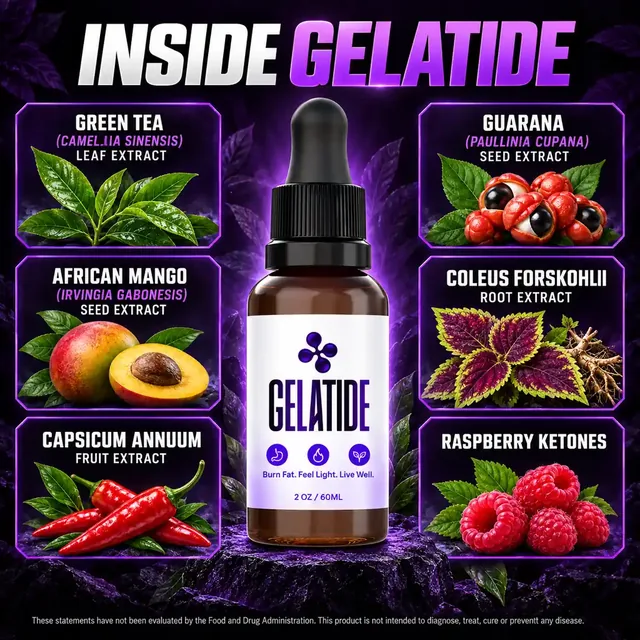
Green tea sounds like the safest thing in the cupboard. A cup of it is. A concentrated extract in a bottle is a different object, and the research treats it differently. This page explains the liver signal in plain terms, what it does not mean and what a careful buyer can do.
- The signal: rare liver injury linked to concentrated green tea extract, not to drinking tea.
- In Gelatide: green tea leaf extract is named; the amount is not published.
- Caffeine: green tea carries it unless decaffeinated. The label does not say which extract was used.
- Practical step: take the drops with food rather than on an empty stomach.
- Warning signs: unusual tiredness, loss of appetite, stomach pain, dark urine, yellow skin or eyes.
- Who should ask first: anyone with liver disease or on medicine the liver handles heavily.
General information, not medical advice. Gelatide is a dietary supplement for healthy adults aged 18 and over. It is not FDA approved, and no dietary supplement is. It is not meant to diagnose, treat, cure or prevent any disease. If you have a medical condition, take prescription medicine, are pregnant or nursing, or are unsure, ask a doctor or pharmacist before you start.
What is the liver signal with green tea extract?
Doctors who track drug and supplement injuries to the liver have recorded rare cases linked to green tea extract. The case record is summarised in LiverTox, a resource from the National Institute of Diabetes and Digestive and Kidney Diseases, and a wider review looked at liver injury from herbal and dietary supplements as a group.
The signal attaches to concentrated extract. It is not tied to brewed tea. It is described as more of a concern at higher intakes and on an empty stomach. It is rare, but it can be serious, which is why it gets its own page on this site.
Is a cup of green tea the same as the extract?
No. A cup of tea is a dilute, food-like drink. An extract concentrates the catechins into a small dose. That difference is the whole point of the warning.
| Point | Brewed green tea | Concentrated extract |
|---|---|---|
| Form | A drink with the leaf steeped in it | A liquid or capsule with plant compounds concentrated |
| Liver signal in the research | Not linked | Rare cases linked |
| Dose you can read | Hard to count | Should be printed; on Gelatide it is not |
| Caffeine | Present unless decaffeinated | Present unless decaffeinated; not stated here |
A friend who drinks green tea daily is in a different position from someone taking a concentrate. Do not borrow reassurance across the line.
What does the safety research say overall?
A systematic review of the human safety literature concluded that green tea and its extract are generally well tolerated at the intakes studied. That is reassuring. It is also tied to those intakes.
In this bottle the intake is not stated. So neither the reassurance nor the warning can be sized. That is the same caution that runs through this whole site: without a dose on the label, risk cannot be measured, only described.
Not published is not the same as small. When an amount is missing, assume the unknown can matter, and act on the cautions rather than on hope.
Want to read the safety page before you buy?
The order page shows the packs and the 60-day guarantee. If the drops do not suit you, you can stop and ask for a refund inside the window.
From $49 a bottle · 60-day money-back window
See today's price and guaranteeDisclosure: Gelatidebalance earns a commission on orders placed through the links on this website. The checkout sets the final price.
What does that mean for Gelatide in particular?
Gelatide names green tea leaf extract on its ingredient panel. No amount is printed. The label also does not say whether the extract was decaffeinated. Green tea is one of two caffeine sources on the panel, together with guarana.
- Amount of green tea extract: not published.
- Catechin or EGCG figure: not published.
- Caffeine from this extract: not published.
- Trials of the finished bottle: none.
The research on green tea and body weight uses a stated catechin dose, usually several hundred milligrams a day. This label prints no figure, so the comparison cannot be made in either direction. Our ingredients page gives the other five extracts the same treatment.
What can you do to lower the risk?
- Take the drops with food, not on an empty stomach.
- Tell your doctor or pharmacist that the bottle contains green tea leaf extract, and show them the label.
- Do not stack other green tea extract products or other herbal weight products on top.
- Stop and call a doctor if warning signs appear. Do not wait to see if they pass.
- Keep the refund route in mind. Opened bottles are covered for 60 days from purchase.
If you already have liver disease, or take medicines that the liver handles heavily, ask a doctor before starting. That advice is general. It is not a replacement for a conversation about your own record.
Which warning signs should send you to a doctor?
These are not subtle symptoms. They are worth knowing before the first serving, not after.
- Unusual tiredness that is not explained by your week.
- Loss of appetite that comes on without a reason.
- Pain in the upper stomach area.
- Dark urine.
- Yellowing of the skin or the whites of the eyes.
If any of these appear, stop the drops and seek medical advice. Tell this desk too, on +1 (202) 604-0611. We log it and tell the maker, and a refund inside the window does not require you to argue for it. For a serious problem, a report to the authorities is also how signals like this one get found.
Frequently asked questions
Does green tea extract cause liver damage?
A rare liver injury signal is linked to concentrated green tea extract, not to brewed tea. Most people tolerate it, but the risk cannot be sized for Gelatide because no amount is printed.
Is Gelatide safe for the liver?
That cannot be promised. Gelatide names green tea leaf extract and does not publish the amount. Take it with food and see a doctor about the warning signs.
How much green tea is in Gelatide?
Not published. No amount is printed for any of the six extracts, and there is no Supplement Facts panel.
Should I take Gelatide on an empty stomach?
It is safer to take it with food. An empty stomach is linked to more concern with concentrated green tea extract, and the pepper extract can upset the stomach.
What are the signs of a liver problem?
Unusual tiredness, loss of appetite, stomach pain, dark urine, and yellow skin or eyes. Stop and see a doctor if you notice any of them.
Who should ask a doctor before taking Gelatide?
Anyone with liver disease, anyone on medicine the liver handles heavily, and anyone pregnant, nursing or under 18, for whom the label says it is not meant.
Our view
Our view is that the liver signal is real, rare and specific. It does not make green tea a villain, and it does not make this bottle dangerous. It does mean a missing dose on a label has a cost, and the buyer carries it.
If you have a liver condition, ask first. If you do not, take the drops with food, watch for the warning signs, and know that opened bottles are covered by the refund window. This page is general information and not medical advice.
Ready to look at the packs with the cautions in mind?
The order page shows today's price and the 60-day guarantee. You can read the safety page first.
From $49 a bottle · 60-day money-back window
See today's price and guaranteeDisclosure: Gelatidebalance earns a commission on orders placed through the links on this website. The checkout sets the final price.
Last updated . Medically reviewed by Dr. Dyan Hes, MD, Physician on the same date.
Sources cited in this article
- LiverTox: Clinical and Research Information on Drug-Induced Liver Injury. Green Tea. Bethesda (MD): National Institute of Diabetes and Digestive and Kidney Diseases. https://www.ncbi.nlm.nih.gov/books/NBK547925/
- Navarro VJ, Khan I, Björnsson E, Seeff LB, Serrano J, Hoofnagle JH. Liver injury from herbal and dietary supplements. Hepatology. 2017;65(1):363-373. https://pubmed.ncbi.nlm.nih.gov/27677775/
- Hu J, Webster D, Cao J, Shao A. The safety of green tea and green tea extract consumption in adults — results of a systematic review. Regul Toxicol Pharmacol. 2018;95:412-433. https://pubmed.ncbi.nlm.nih.gov/29580974/
- National Center for Complementary and Integrative Health. Green Tea. https://www.nccih.nih.gov/health/green-tea
- Hursel R, Viechtbauer W, Westerterp-Plantenga MS. The effects of green tea on weight loss and weight maintenance: a meta-analysis. Int J Obes (Lond). 2009;33(9):956-61. https://pubmed.ncbi.nlm.nih.gov/19597519/
- Vázquez Cisneros LC, López-Uriarte P, López-Espinoza A, et al. Effects of green tea and its epigallocatechin (EGCG) content on body weight and fat mass in humans: a systematic review. Nutr Hosp. 2017;34(3):731-737. https://pubmed.ncbi.nlm.nih.gov/28627214/
- National Center for Complementary and Integrative Health. Using Dietary Supplements Wisely. https://www.nccih.nih.gov/health/using-dietary-supplements-wisely